


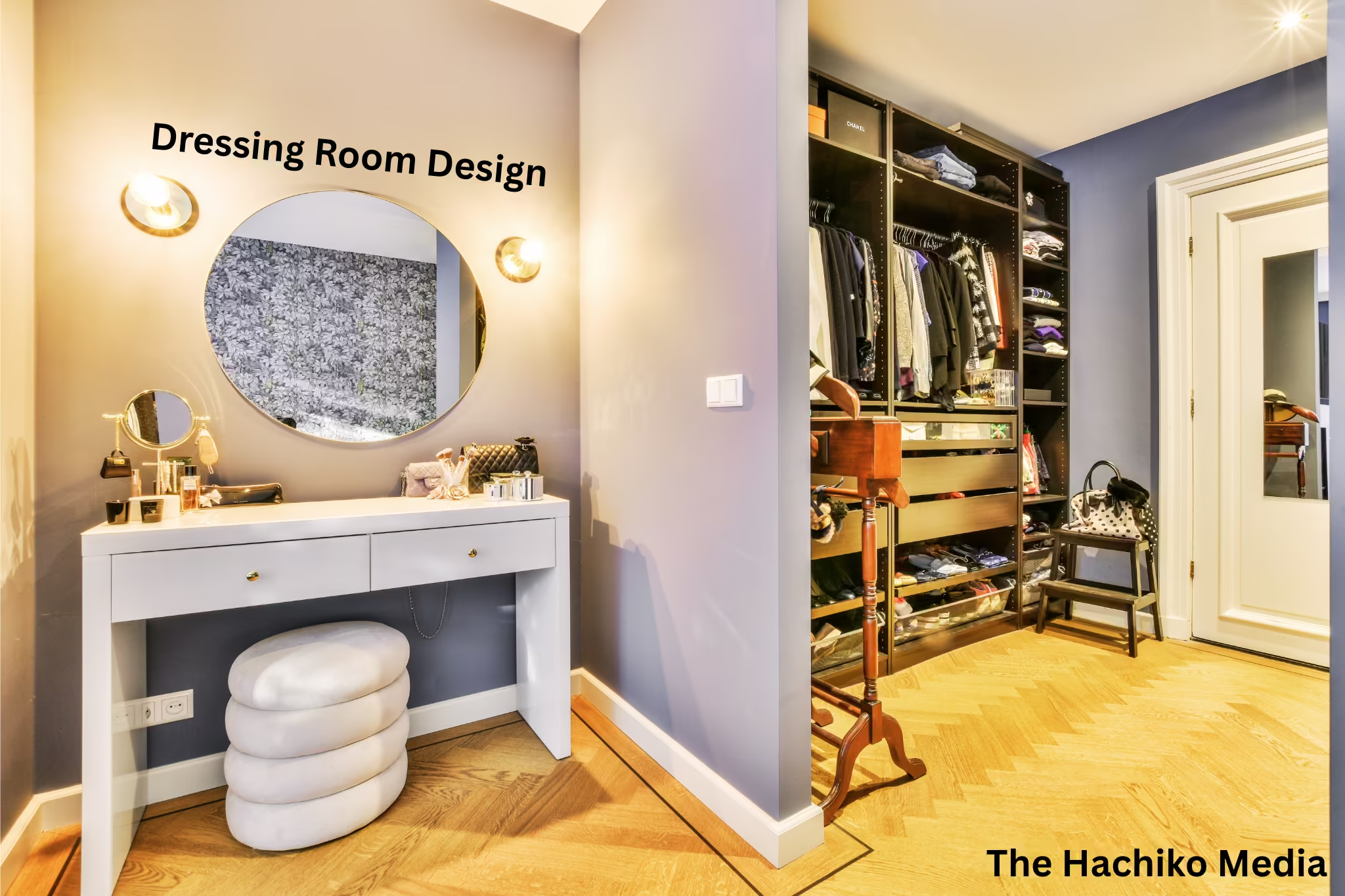
A Dressing Room Design is not only a room to keep your clothes but also a place that you start and finish your day. Your day to day life can be enhanced by the proper design of your dressing room whether you are about to attend a big event or even just have to go to work. The design of the dressing room can make it look like the room is made up of comfort and prominence. We shall discuss different design concepts, the key features, and tips that will allow you to design the most ideal dressing room that serves as a style-meets-purpose element in this article.
Why a Dressing Room?
There are several advantages of having a special place to store your wardrobe. The first reason is that it brings sanity to your life. Dressing room is more convenient than rummaging through heaps of clothes in a bedroom or a closet, as you can easily locate and select clothes. Besides, dressing rooms are very spacious and secluded and you get to explore the clothing and looks to be applied to yourself.
An elegant dressing room is not just aesthetically pleasing but it makes the best use it can out of a small room. When planning to design or refurbish an already available space, you should always have in mind several design factors which will make your dressing space not only functional but also a fashionable one.
The major aspects of a stylish dressing room design.
Storage Solutions
Effective storage is one of the major elements of any Dressing Room Design. The Dressing Room Design must have a lot of space to hang clothes, keep shoes, accessories, and even seasonal things. The following are ways of maximizing storage:
Open Shelving: Shelves are highly useful when it comes to displaying accessories, shoes as well as handbags. You can also easily have a glance at everything you have with open shelves.
Hanging Rods: It can be recommended to have more rods of various lengths that are hung at various levels so that shorter and longer clothes can be worn. A rod system which is hanging twice can be the best to make more out of the vertical space.
Drawers and Cabinets: Drawers or built-in cabinets are ideal with respect to objects such as jewelry, scarves, and other smaller accessories that can be kept in a place where they are not seen.
Shoe Racks: Have a shoe rack or shelf system where you keep your shoes. Adaptable shelves or transparent acrylic boxes may be used to ensure that they are visible and well stored.
Lighting
A Dressing Room Design must have good lighting so that you can view yourself well, when dressing or choosing accessories. Optimally, the light must be dim and bright enough to enable you to critique your clothes and their appearance.
Ambient Lighting: Begin with ambient lighting in form of ceiling-mounted lights or chandeliers. Soft lighting can be used to give general lighting without being too intense.
Task Lighting: Have task lighting, such as a vanity light above or at the mirror, to make it easier to see when putting on clothes or applying make up.
Accent lighting: You can add some extra style by accent lighting so it brings out some aspects in your Dressing Room Design like feature wall, artwork or your shoe rack.
Mirrors
A Dressing Room Design must be equipped with mirrors. A full size mirror is used to evaluate the entire outfit in terms of its appearance, top to bottom, to make sure it fits. Mirrors also make the room appear larger and this is mainly applied in small rooms. To make it look opulent and practical, provided you have the space, you can opt to have mirrored walls or several mirrors.
Full-Length Mirrors: These are very crucial in viewing outfits at a whole.
Mirrored Furniture or Fixtures: It would be a nice touch to include mirrored furniture such as a mirrored dressing table or even mirrored closet doors.
Color Palette
Color schemes used will play an important role in the atmosphere and sensation of the room. The white and cream colors with pastel coloring can be used to create a feeling of airiness and spaciousness in a small Dressing Room Design. Darker colors, on the other hand, like navy, charcoal, or deep green, have a more personal and comfortable effect.
To achieve an elegant and classic appearance, you might add some color to the neutral choice, like accent wall in dark color tones or metallic material (like gold or silver). Mirrors, glass or shiny surfaces can also be added to reflect the light and make the space look larger.
Furniture and Accessories
The Dressing Room Design must be well-equipped with furniture and accessories that will blend with the design. Here we may introduce personality and coziness.
Ottoman or Seating: Throw in some comfortable seating or ottoman in your Dressing Room Design to sit on when putting on your shoes or when deciding what to wear. It can also be used when you need to rest other than standing when dressing.
Flooring and Clothing: You can make your Dressing Room Design more luxurious and comfortable with a plush rug or carpet. Select soft and quality materials of textiles that depict the design approach you want.
Decor: You should also include personal touches like artwork, plants or decorative objects that would make the room look like yours. The artwork in a specific place or fresh flowers in a vase can add warmth and style.
Optimizing Small Dressing Room Stations.
When you have a small area, then you should not panic as there are numerous things which you can do out of each square inch. The following are some of the tips on maximizing your dressing room:
Use Vertical Space: High shelves or hanging rods can be used to utilize the unused vertical space. This comes in handy especially in small rooms whereby the floor space is minimal.
Small Furniture: Focus on small furniture, such as a slender vanity or a folding chair, that can take up less space but is still useful.
Open Shelf and Display: Open shelves and racks should be used to showcase clothes in a neat manner as opposed to having heavy wardrobes. This makes everything available and does not make the space too crowded.
Sliding Doors: When not enough room to have conventional closet doors, choose sliding doors to your wardrobe. These conserve space and give it a smooth and contemporary appearance.
Walk-In Dressing Room vs. Built-In Closet.
Dressing room design is one of the areas when making your first decisions, you consider the option of having a walk-in closet, or the built-in wardrobe. The pros of both of them are:
Walk-In Dressing Room: Walk-in Dressing Room Design is a luxurious feeling with lots of space where you could surely indulge in your wardrobe. It has ample space in terms of storage, sitting, and even mirrors. It suits bigger houses or in case you have a special place that you want to transform it into a dressing area.
Built-In Closet: In cases where space is constrained, built-in closet can be very useful. It is smaller and fits much better into your room. The closets inbuilt can be customized as required with shelves, drawers, and hanging rods and they conserve space and give a clean and organized appearance.
Conclusion
Your Dressing Room Design must be well designed to look good, and be functional to ensure that you have a comfortable space to prepare, place clothes and even enjoy your wardrobe. Regardless of the decision to make the dressing room a luxurious walk-in or a small built-in, you need to properly plan the layout, storage, lighting and color scheme to make the dressing room the ideal. Dressing room can become your fashionable and convenient oasis with the help of the proper design elements that will improve your daily routine and reflect your own taste.
