



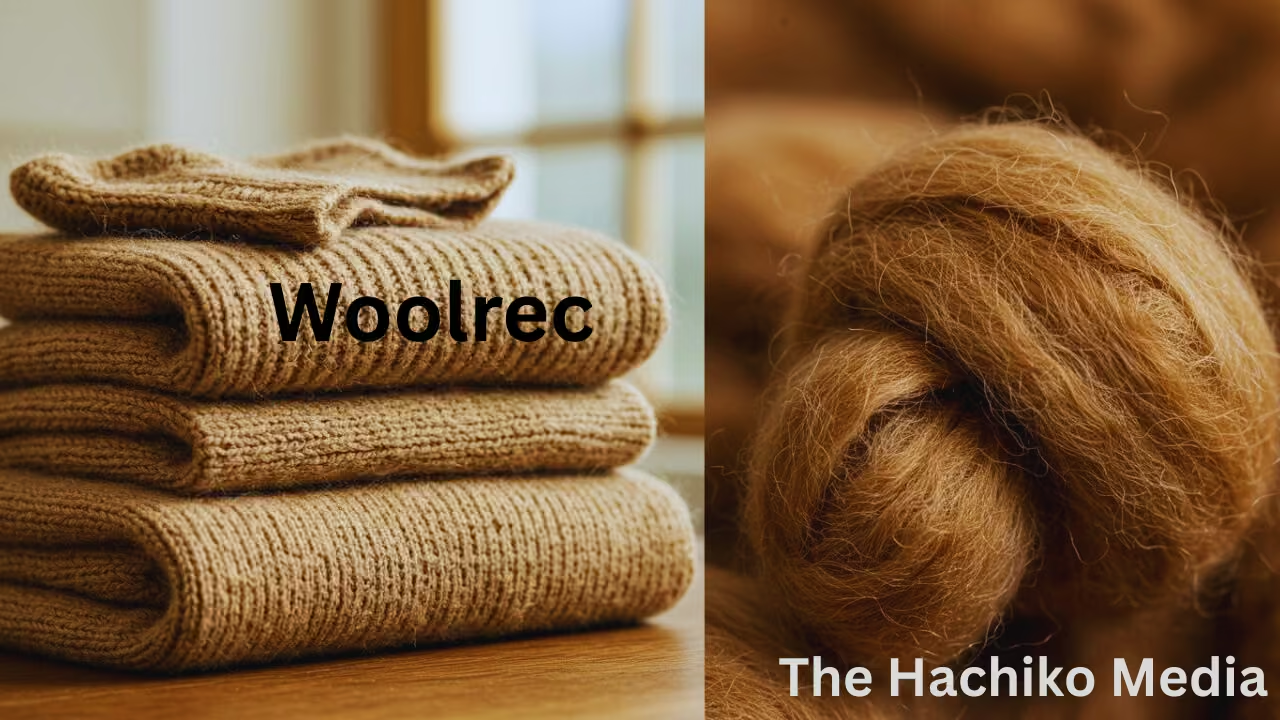
The Development of Sustainable Textiles and Woolrec’s Function
The fashion and textile industry is at a breaking point. The world has been dealing with mountains of fabric waste, overproduction, and a never-ending search for less expensive materials for decades. However, one name subtly symbolizes a significant change as sustainability becomes a global necessity: woolrec.
Fundamentally, woolrec represents the circular fashion of the future: an ecosystem in which all fibers are given a second chance at life and no wool is wasted. It is a shift in our perspective on responsibility, waste, and value that goes beyond simple recycling.
Woolrec is becoming the link between history and innovation as more companies and consumers place a higher priority on eco-friendly options. It redefines what “sustainable luxury” really means by fusing the artistry of natural fibers with state-of-the-art recycling technologies.
Knowing What It Means in Reality
Two concepts are combined in the name woolrec: wool as a high-end, natural material and rec as a contraction of recovery, recycling, and regeneration. When taken as a whole, they show a shift toward wool recovery methods that minimize environmental impact while maintaining quality.
Wool is renewable and biodegradable, in contrast to synthetic textiles. However, there are environmental costs associated with the manufacture and disposal of traditional wool, including carbon emissions and water use. Woolrec uses recovery and reuse to prolong the lifecycle of wool fibers in an effort to balance this equation.
This idea goes beyond simply making new clothes out of old ones. The goal is to establish a closed-loop textile economy in which every phase of production and disposal contributes to the system in a sustainable manner.
Woolrec’s Environmental Significance
The textile sector is a major source of greenhouse gas emissions, pollution, and landfill overflow. This load can be significantly lessened by concentrating on woolrec processes. Wool recycling reduces the requirement for virgin fibers, which in turn reduces carbon emissions, water use, and chemical use.
Recycled wool processing, for example, usually uses up to 70% less energy than making fresh wool. It lessens reliance on extensive sheep farming, which has long been a topic of ethical and ecological controversy, in addition to protecting the environment.
Woolrec is therefore ideally suited to the idea of a circular economy, in which resources are recovered, materials are reused, and fashion respects environmental limits.
The Woolrec Process: From Waste to Rebirth
It takes skill and accuracy to transform waste wool into a superior product. There are multiple complex steps in the woolrec process, all of which are intended to maintain the sustainability and integrity of the fiber:
Gathering and Sorting — Unsold or used wool clothing is collected and meticulously categorized according to its quality, color, and fiber content. Sorting guarantees uniformity in the finished product.
Cleaning and Preparation: To guarantee that only pure fibers are left, wool is cleaned to get rid of contaminants, oils, and dyes.
Fiber Recovery: Textiles are broken down into reusable fibers using sophisticated mechanical or chemical techniques.
Re-spinning and Refinement: To give the recovered wool strength and texture, it is spun into fresh yarns and occasionally combined with additional fibers.
Recreation of Products: Lastly, new clothing, upholstery, or industrial textiles are made using the new yarns.
Every step shows that sustainability is an art of balance and creativity, not just an environmental decision. Woolrec guarantees that the inherent qualities of wool, such as its warmth, durability, and elegance, are preserved even while recycling.
A Sign of the Circular Design Philosophy: Woolrec
Circular design reimagines the lifecycle of materials. By considering lifetime and regeneration while designing items, it questions the take-make-dispose paradigm. By portraying wool as a living substance with several lifespans, Woolrec exemplifies this idea.
This change has significant ramifications. These days, designers consider the material’s future in addition to comfort and style. Every wool item is viewed as a component of a larger cycle, an ecosystem in which responsibility and creativity coexist.
Brands can create collections that are opulent and guilt-free by implementing the woolrec principles, which also lessen reliance on raw materials and prevent waste from ending up in landfills.
The Innovation in Technology Driving Woolrec
Amazing technological ingenuity is what gives recycled wool its charm. Advanced fiber separation equipment, AI-powered sorting systems, and hygienic re-dying methods that prevent water contamination are all used in contemporary woolrec facilities.
Systems for digital traceability also guarantee transparency. Because each batch of recycled wool can be tracked back to its origin, customers may be confident in its quality.
Enzymatic recycling, in which wool fibers are gently broken down by natural enzymes for recovery without the need of harsh chemicals, is being investigated by researchers in some areas. Woolrec’s scientific sophistication and sustainability are a result of these advancements.
Its Economic Effects and the Value Chain of Its New Industry
It is a common misperception that sustainability is costly. Woolrec, on the other hand, demonstrates that circular systems are not only feasible but profitable.
Reusing pre-existing materials helps manufacturers cut expenses related to the creation of raw fiber. Additionally, products made from recycled wool have a high level of market appeal and draw ethically concerned buyers.
Woolrec concepts are now the foundation of entire industries. The concept generates employment, encourages innovation, and opens up new markets, from small-scale craftspeople making handcrafted things from recycled fibers to multinational corporations redesigning supply systems for circularity.
This expansion shows that woolrec is an economic strategy for the next generation of textile industry, not only an environmental endeavor.
Brands and Customers’ Contribution to the Woolrec Movement
Woolrec cannot be successful on his own. It flourishes when consumers and brands share accountability for the textile lifecycle.
By creating clothing that can be repurposed, dismantled, and reprocessed, brands contribute to the solution. Customers also help by choosing circular collections, returning unwanted goods for recycling, and putting durability over rapid trend.
As this collaboration grows stronger, the ecology as a whole becomes self-sufficient. Every stakeholder joins the group’s endeavor to preserve the environment and reinterpret what fashion means.
Woolrec and the Materials’ Emotional Value
Sustainability is a very emotive topic in addition to systems and science. Wool conveys warmth, tradition, and continuity. Old clothes take on new identities thanks to woolrec, enabling memories to change rather than vanish.
It is possible that a family heirloom sweater will make a comeback in the wardrobe of a new generation. A contemporary design piece might give a discarded blanket a new purpose. In this way, woolrec transforms sustainability into something artistic and intensely personal while bridging generations through material metamorphosis.
Woolrec vs. Other Textile Recycling Techniques Comparison
Woolrec distinguishes out for its emphasis on natural fibers and its capacity to preserve quality following recovery, even though textile recycling encompasses a wide range of materials. Wool’s inherent elasticity and structure enable it to be reused numerous times, but synthetic materials frequently lose their integrity with each recycling cycle.
Additionally, woolrec is more in line with biodegradability objectives. No synthetic fiber can match the natural decomposition that occurs when a recycled wool product reaches the end of its life, returning nutrients to the earth.
Woolrec is a key component of future textile systems where sustainability and performance coexist peacefully because of this differentiation.
Global Momentum: Its Influence on Industry Change
Globally, industrial standards are being impacted by sustainability guidelines. From local cooperatives to huge production hubs, more players are embracing woolrec practices to line with global environmental aims.
Woolrec is a movement that integrates science, design, and environmental ethics, as seen by its increasing momentum. Economies of scale will further increase accessibility and price as demand rises, turning sustainable wool from a specialist product into the norm.
The repercussions go beyond just fashion. The potential of woolrec extends well beyond clothing, as evidenced by its effect on home textiles, automobile interiors, and furniture.
Innovation’s Future: What Woolrec Can Expect
The woolrec ecology will make significant strides over the next ten years. Existing technologies include biodegradable dye systems, intelligent sorting robotics, and 3D fiber mapping. Wool recovery will be quicker, cleaner, and more accurate thanks to these advancements.
Digital tools that monitor wool manufacturing to post-consumer recycling will also improve trust and accountability. Transparency will become the new norm as more businesses incorporate woolrec into their operations.
Most significantly, this movement will continue to be shaped by consumer education. Woolrec will become a cultural revolution rather than merely an industrial one as people embrace circular living and recognize the importance of materials.
Why It Is the Essence of Contemporary Sustainability
Despite the fact that many sustainability phrases have become marketing jargon, Woolrec stands out for its quantifiable, real-world impact. It is based on genuine, cyclical change rather than hollow promises.
It serves as a reminder that sometimes development involves reinventing what currently existing rather than creating something entirely new. Woolrec shows us that innovation and preservation can coexist by revitalizing old fibers.
Each thread that is kept out of the trash contributes to a larger narrative that honors continuity, workmanship, and the environment.
A New Age of Intentional Creation
The ideas underpinning wool rec will spur many advancements in material science and product design as industries change. The fashion industry will transition from ownership to stewardship and from consumption to regeneration.
Wool rec is a living example of what can happen when ethics, technology, and creativity come together. It is about rethinking creation itself, not just recycling.
By adopting the wool rec attitude, we move closer to a future in which sustainability is the standard rather than the exception and where each decision we make promotes harmony, beauty, and a lasting legacy for future generations.